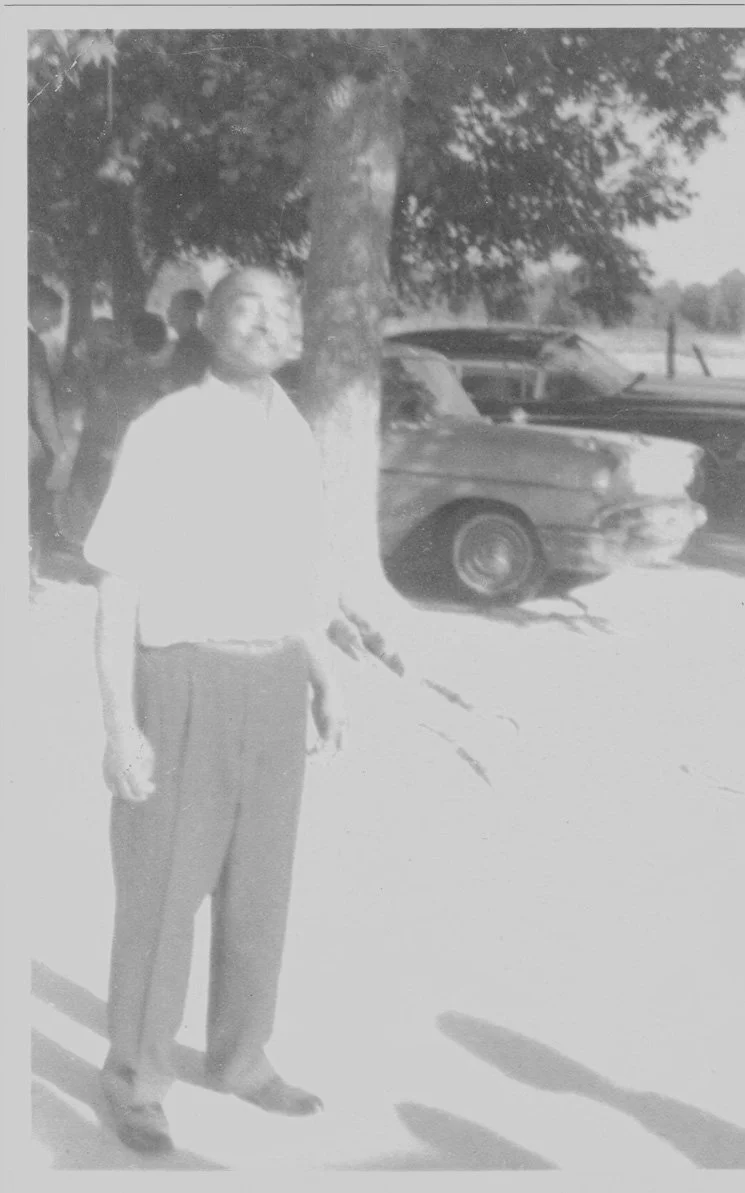
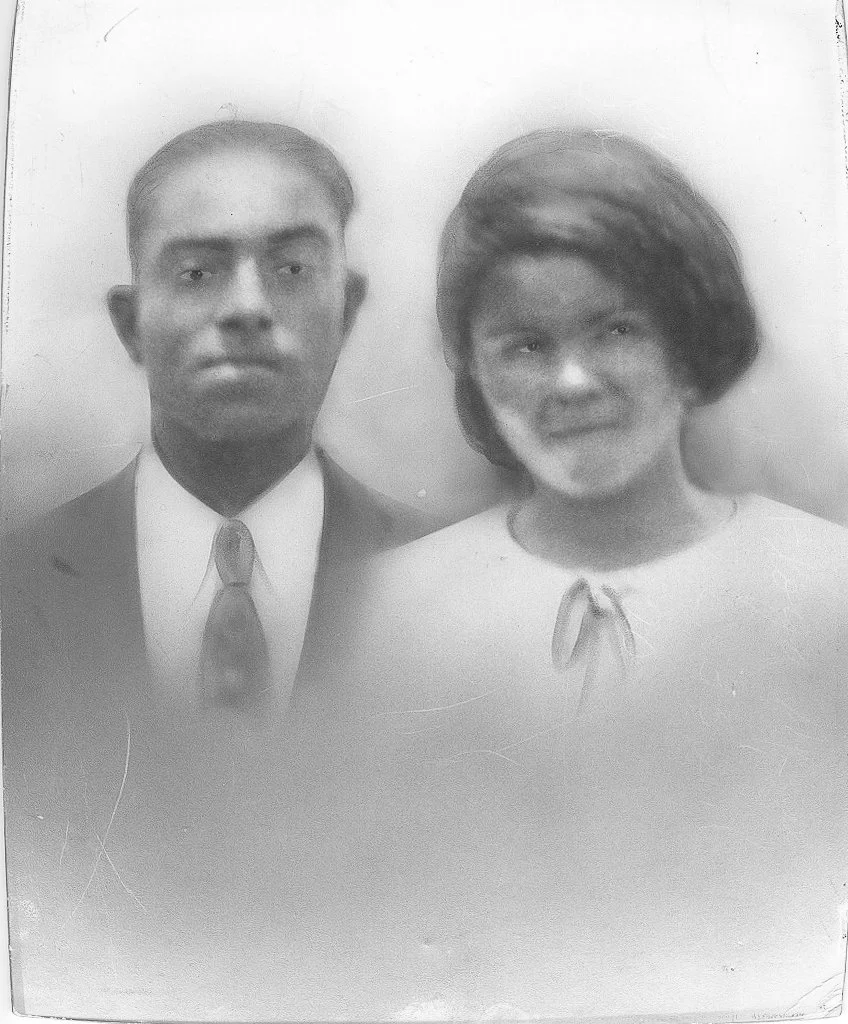
David and Channie Hall
The eldest of eight children, David Hall was born on October 23, 1905 in Ackerville, Alabama. Channie Hicks was born on September 3, 1915 in Richmond, Alabama. David and Channie were married in July 1931, and lived in Shephersville, Alabama. Through hard work, David and Channie created a better life for their children. In June of 1940, the Halls purchased an 80-acre farm 7 miles southeast of Selma, Alabama. David and Channie were landowners at a time when most Alabamians, black or white, in the rural south only dreamed of such an accomplishment.
The young couple worked their farm from sunup to sundown, alongside their children who were old enough to help. The Halls bought a horse, two mules, plows and other farm equipment to start their new farm. They planted and cultivated the land to grow cotton, corn, sugar cane, hay, sweet potatoes, nuts and many other crops. The land was considered prime, and yielded extraordinary crops. Aside from the crops produced, the Halls raised cattle, hogs, chickens, ducks, geese, and other livestock. They planted pecan trees to surround their home and a fruit orchard in the back of their house.
Channie
“You can’t teach what you don’t know. You can’t lead where you don’t go.”
Channie was a devoted wife and mother known for her charming personality. She was as talented as she was virtuous. She was a five-star, southern chef and masterful seamstress. She guided her children with wise sayings. She demonstrated positive examples, inspired by her Pentecostal faith. Channie lived by the golden rule, “Do unto others as you would have them do unto you.” She taught her children to think, and “use their heads for more than a hat rack” because there is “no need in putting a 25 cent hat on a 10 cent head.” She taught her children discernment saying, “when people show you who they are, believe them” because, “a leopard doesn’t change its spots.” She encouraged her children to, “watch what people do, not what they say.” Channie was brilliant in every sense of the word.
After giving birth to their seventh child, Channie’s doctor advised that it was not medically safe for her to have more children. In the 1940s, however, reproductive health resources were virtually non-existent especially in rural areas. Channie, like most women of that era, had no choices and limited information about reproductive health. After giving birth to her eighth child, George Norman, Channie became ill and was bedridden for nearly two years. George Norman was born blind, mute and paralyzed.
Still, Channie maintained her faith singing hymns with church members who held services at her bedside. David cared for her after work. Their daughter Susie was often allowed to complete her school work at home so that she could care for her mother during the day. On August 26, 1950, Channie died at age 35. But, she left an indelible mark on David as a partner, and together they shared a beautiful vision for their home and children. Channie made David a better person.
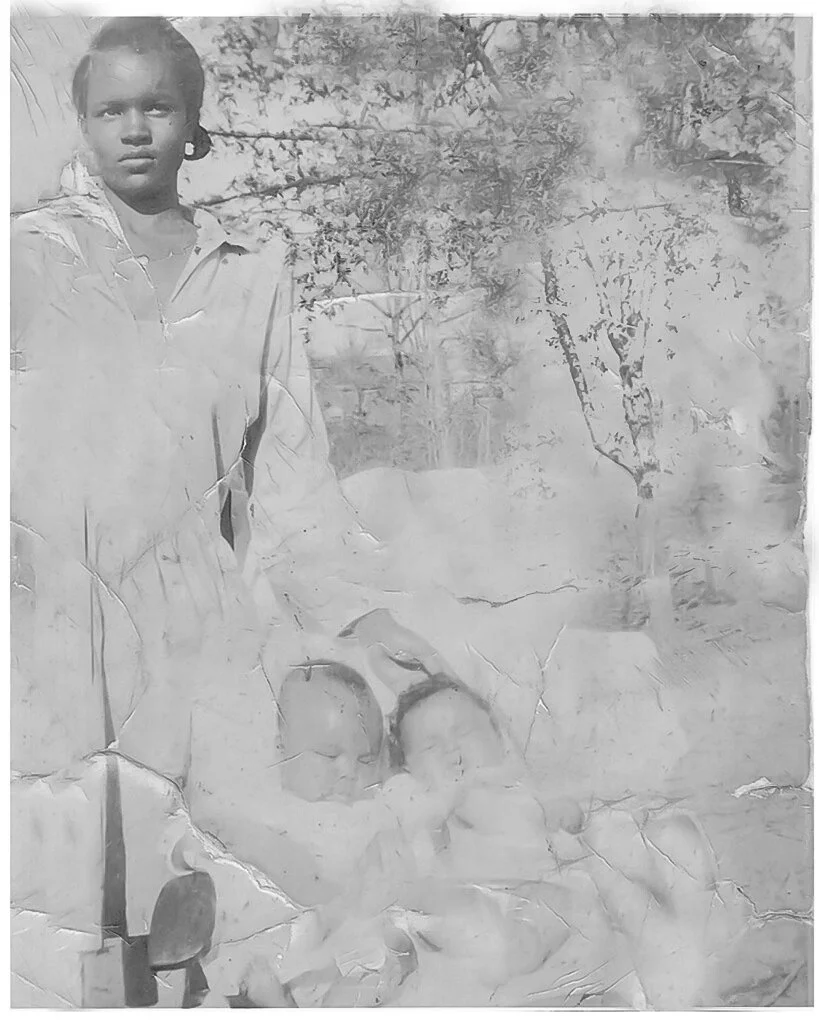
Channie with her first child Dorothy Grace (right) and her second-cousin Marileta (left) in 1932.
The same people that you see going up the ladder, you see coming down
— Channie
David
“It’s a mighty bad wind that never changes.”
David Hall was a wise and humble man with integrity and strong convictions. At age 13, David’s father died. As the eldest, he left school to work cutting and hauling pulpwood to support his mother and seven siblings.
David was a man of few but profound words, leaving one with thoughts to ponder. He believed that, “God gave us two ears and one mouth so that we can listen more than we speak.” He believed in family pride and family values – high moral standards. He often explained that, “Your word is your bond. If a man’s word is no good, then he’s no good.” David encouraged his children to make wise decisions because, “If you make your bed hard, you have to lay in it.” In addition to working the farm six days a week, he also worked a full-time job at the Selma Housing Authority/George Washington Carver Homes five days a week.
After working the farm in the early morning hours he would report to the Housing Authority. He returned to finish his chores on the farm at the close of the day. Among many things, he taught his children good work ethics. He believed that, “A job worth doing, is worth doing well.”
Out of all of David’s attributes, generosity was certainly not lacking. Sharing the fruits from his labor was a given – it mattered not whether neighbors or strangers. Because David understood that, “You know where you have been, but you don’t know where you are going.”
It was not unusual for strangers to stop by and ask for melons, peas, beans, corn, or sugarcane. They would say, “I was just passing through and saw your …” None would ever be turned away – even without knowing their name. He would not ask them to pick their own fresh melon or peas, but he would tell his children to gather them. He would often say to his children “God blesses us so that we can be a blessing to others.” In essence, David went above and beyond for his neighbors. In addition to a thriving farm, David was the first in the community to own a telephone. Neighbors would give David’s number to relatives scattered across the black migration, near and far.
When calls came in no matter the hour, David would drive to pick up the neighbor, bring them to his house and allow them to use the phone all while the caller remained on hold. On some occasions, neighbors would stay on David’s phone for hours despite the hourly rate, not to mention the hold time during transport. David never accepted payment for these calls.
As for family, Uncle David’s house was always the destination for dozens of his siblings, nieces and nephews for months at a time on occasion – especially during holiday seasons.
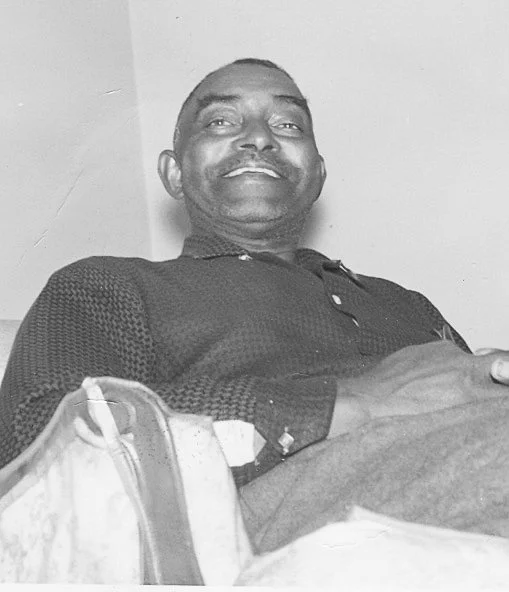
One week after burying his wife Channie, David buried his mother Pearlie. But, David’s faith gave him the strength to find joy.
Heaps see, but few know.
— David
As David’s children became adults and moved away, his farm help decreased. For the first time, David hired farmhands. On a typical workday, he would drive to downtown Selma to pick up his farm workers and take them to his farm. He would then drive back to the George Washington Carver Homes to work a full day. Then, in the afternoon, he would work on the farm. This was his routine until a life altering encounter in March of 1965.
While eating at a local diner David overheard organizers discussing the campsites for the Selma to Montgomery Voting Rights March. The original volunteer for Campsite 1 was a black sharecropper. When the white land owner learned of the plan, the sharecropper was not allowed to offer the land for use. David stepped up, volunteered his farm, and secured the critical, first campsite for the 1965 Voting Rights March. Three-hundred marchers camped on the Hall Farm. Dr. King was quoted about his experience sleeping in a sleeping bag for the first time. Andrew Young’s admonition of rowdy youngsters was described by journalists.
David’s belief in universal voting rights led him to take a courageous stand knowing that retribution from the white community would likely follow. After the march, David faced serious consequences. Bankers and business owners would not do business with him. David, who conducted business with People’s Bank & Trust for years, was no longer a welcomed patron. His account was closed. Other businesses made it difficult for him to secure lines of credit necessary for operating his farm. His life was threatened and he was often visited at night by men on horseback circling his home. But, David never regretted his decision to do the right thing.
David maintained ownership of his property, but lost his ability to farm. He continued to work at the George Washington Carver Homes to support his family, retiring in 1971. He died on July 22, 1972. David was a humanitarian, and a devout Christian.